
Delving into the musical universe of The Heligoats is akin to stepping into a meticulously crafted diorama of the human condition, viewed through a lens both peculiar and profoundly insightful. At the heart of this unique project stands Chris Otepka, a songwriter whose lyrical prowess carves a distinct niche within the indie folk and rock landscape. His work is characterized not by bombast or overt pronouncements, but by a steady accumulation of what have been aptly termed “sideways ideas and observations.” This description perfectly encapsulates the essence of his writing: approaching familiar subjects—love, loss, existence, the inner workings of our own minds and bodies—from unexpected angles, revealing truths often missed in more direct confrontations.
Otepka’s lyrical perspective is undeniably quirky, infused with an imaginative spirit that often finds metaphors and narratives in the unlikeliest of places. He demonstrates a fascination with the tangible and intangible aspects of being human, frequently exploring the mechanics of the body and the labyrinthine corridors of the mind, but doing so in ways that eschew cliché. Where other songwriters might use the heart as a simple symbol of love, Otepka might ponder its circulatory function, its vulnerability, or its rhythm as a literal, physical anchor in a confusing world. This isn’t cold, clinical observation; rather, it’s a form of intimate curiosity, a way of grounding abstract emotions in physical reality, or finding the extraordinary within the biological mundane.
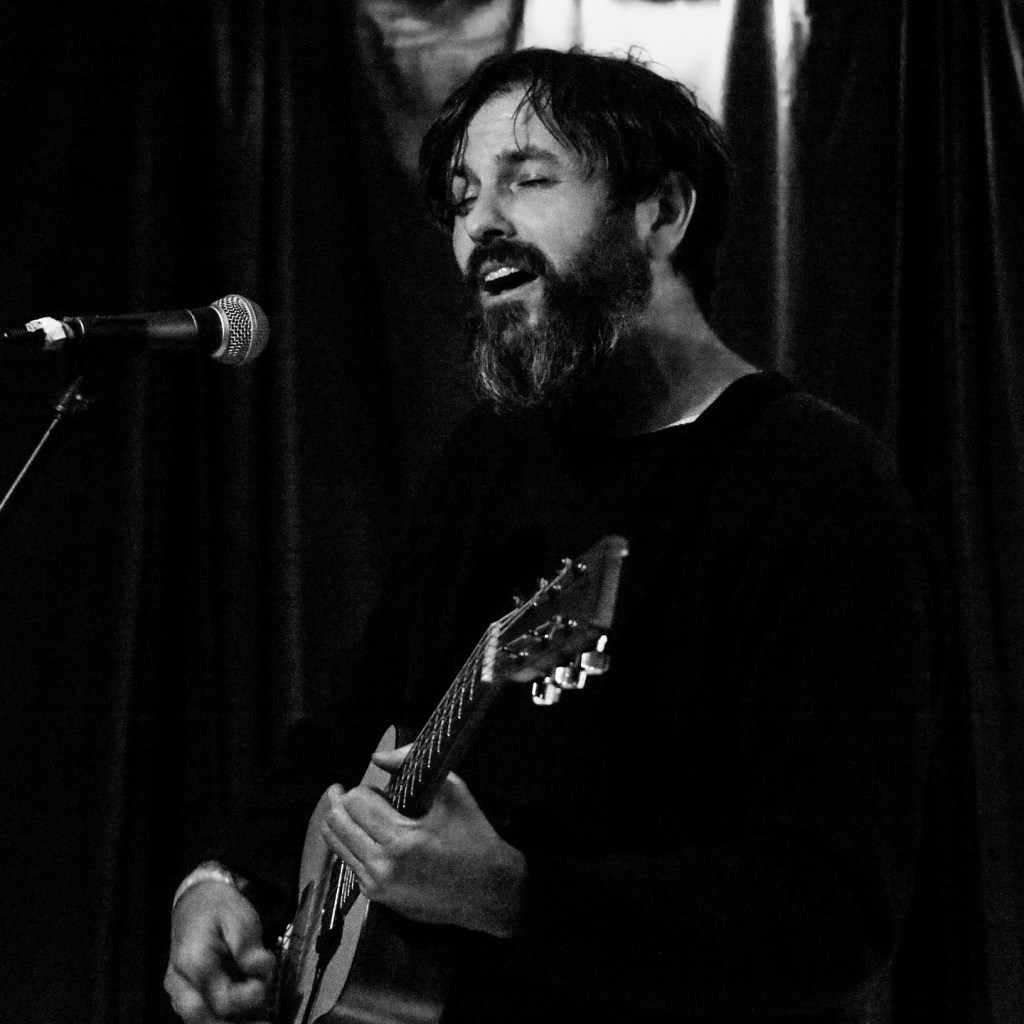
NPR’s acclamation of his lyrical narratives hits the nail on the head, praising his “wise, wry observations on human emotions, science,” and attributing them to an “endlessly curious mind.” This highlights a crucial duality in Otepka’s work: the seamless integration of the emotional and the analytical. His songs often feel like the product of someone who reads both poetry and scientific journals, someone who sees the interconnectedness of feeling and fact, of subjective experience and objective reality. The “wry” quality suggests a subtle humor, a knowing glance, an understanding of life’s absurdities without succumbing to cynicism. His curiosity seems boundless, leading him down lyrical paths that might investigate the physics of sound, the behavior of insects, or the geological history beneath our feet, all while subtly reflecting on the human experience.
Despite the often surreal or unconventional subject matter—songs about fish, anatomical processes, or abstract scientific concepts—Otepka’s lyrics resonate with a profound sense of honesty and restraint. There’s a refreshing lack of melodrama; emotions are presented authentically, often with a quiet intensity that proves more powerful than overt displays. This sincerity is bolstered by his technical skill. He employs interesting and often unexpected rhyme structures, moving beyond simple AABB patterns to create more complex and satisfying sonic textures. His phrasing is inventive, twisting familiar language into new shapes, crafting lines that stick in the mind not just for their meaning but for their unique construction. He possesses a remarkable knack for forging simple yet brilliant lines—distillations of complex feelings or ideas into relatable, poignant statements that connect deeply with listeners. These are not lyrics designed for mass consumption on pop radio; they inhabit a realm of whimsical, heartfelt, and sometimes wonderfully weird storytelling, demanding and rewarding closer attention.

Vocally and lyrically, comparisons have occasionally been drawn to figures like Doug Martsch of Built To Spill or John Darnielle of The Mountain Goats. These comparisons often point to a shared sincerity, a slightly nasal vocal delivery that carries earnestness, and a focus on detailed, narrative-driven lyrics. Martsch’s knack for weaving intricate emotional landscapes and Darnielle’s dense, literary storytelling certainly share some common ground with Otepka’s approach. However, these comparisons serve more as contextual signposts than definitive classifications. Otepka’s voice, both literally and figuratively, remains uniquely his own. His specific thematic preoccupations—particularly the blend of scientific curiosity and introspective emotion—and his distinct brand of observational quirkiness set him apart. He weaves tales that are simultaneously smart, moving, and utterly memorable, solidifying his reputation as a songwriter possessing truly superior skills, a craftsman of the curious and the heartfelt.

Analysis of “Heat Vents” by The Heligoats
“Heat Vents” transforms from a song of ambiguous connection to a much darker, more complex exploration of internal landscapes, altered states, decay, and self-perception. It stands as a powerful testament to Otepka’s unique lyrical vision.
The lyrics are:
(Verse 1) Yesterday I got lost in a heat vent twice, I know I should have just kept out but you know it was too damn enticing I thought I knew my way back but I must have got turned around because the vent I entered into no longer vent where I remembered
(Verse 2) Heating ducts to take me to an altered mental state, where one has trouble breathing air, but no trouble feeling great To travel inside of a body, travel inside of a vein, if the home is where the heart is in the attic is the brain Like a drain, for the dust, for the pain, for the unwanted items Items in your heat vents tend to stay and die for years until the day their body crumbles and give you dusty tears Filling space you thought so safe, in your room you feel the most Are you breathing heated air or are you breathing heated ghosts? Oh, no
(Verse 3) Now I see it softer than an ice cube and it’s sticking to your tongue, and I see static start to build and fingertips get stung And I can taste electrons now, just the slightest hint I’m still the only one I know, it seems, who dreams of being lint
(Verse 4) Well, now I’m lint I am no one that important I’ll just collect myself in the corner, be some sort of tangible form of boredom Sampled, trampled and never very far from where you are standing I’ll be collected and killed off like skin cells and runoff and sneezes and secrets and clues and insects and refuse and bleeding and breathing and heating and keeping the secrets bottled then fleeing
(Verse 5) Sparking, exploding, head first into black holes, digging and digging and digging and deeper and faster and farther than anything that has ever lasted and all that I hear is the devil laughing
(Verse 6) It keeps me together, it keeps me from blacking out, whiting out, I always know that he’s always right and he’s always right and he’s always here and he’s with me tonight And although he’s losing and hooked up to tubing, I hear his voice through it and it sounds like dust, when he musters up, “I love you.”
Lyrical Breakdown and Thematic Exploration (Revised):
- The Heat Vent as Portal and Trap: The “heat vent” is established not as a conduit for connection, but as a dangerous, enticing space one can get “lost in.” It’s a place of disorientation (“must have got turned around,” “no longer vent where I remembered”). This reframes the metaphor: heat vents represent hidden pathways, perhaps within the self or into altered states of consciousness, which are alluring (“too damn enticing”) but ultimately confusing and potentially trapping.
- Altered States and Internal Exploration: The lyrics explicitly link the vents to an “altered mental state” – a place where breathing is difficult, but the feeling is “great.” This suggests escapism, perhaps dissociation, or even a metaphorical representation of substance use. The journey is explicitly internal: “To travel inside of a body, travel inside of a vein.” Otepka uses the house analogy (“if the home is where the heart is in the attic is the brain”) to firmly ground this journey within the self, specifically the mind. The vents become pathways through one’s own psychological architecture.
- Repository of Decay and the Unwanted: The vents are depicted as drains for “dust,” “pain,” and “unwanted items.” They are liminal spaces where things stagnate and decay (“stay and die for years,” “body crumbles”). This introduces powerful themes of neglected issues, repressed memories, or aspects of the self left to fester. The “dusty tears” and the question “Are you breathing heated air or are you breathing heated ghosts?” suggest that this decay isn’t inert; it actively affects the present, haunting the seemingly safe spaces (“in your room you feel the most”).
- Sensory Distortion and Dissolution of Self: The experience within the vents warps perception. The paradoxical image (“softer than an ice cube and it’s sticking to your tongue”), the physical sensations (“static start to build and fingertips get stung”), and synesthesia (“taste electrons”) all point to a profound alteration of reality. This leads to the striking desire to become “lint” – something insignificant, passive, easily overlooked, accumulating unnoticed.
- Embracing Insignificance and Refuse: The narrator embraces the identity of “lint,” becoming a “tangible form of boredom.” This section is a cascade of self-deprecation and identification with the discarded: “collected and killed off like skin cells and runoff and sneezes and secrets and clues and insects and refuse.” It’s a stark portrayal of feeling worthless, disposable, yet ever-present (“never very far from where you are standing”). The list connects bodily waste, hidden things (“secrets,” “clues”), unwanted life (“insects”), and basic functions (“bleeding,” “breathing”), blurring the line between the narrator’s sense of self and the detritus of existence.
- Descent into Chaos and the Devil’s Presence: The song escalates dramatically (“Sparking, exploding, head first into black holes, digging… deeper and faster and farther”). This suggests a complete loss of control, a spiral into mental chaos or self-destruction. Amidst this, the narrator hears “the devil laughing.” This figure isn’t necessarily supernatural but could represent the narrator’s inner demons, destructive impulses, nihilism, or a personified negative force.
- Paradoxical Stability and Ambiguous Ending: In a startling twist, the devil’s presence provides a perverse form of stability: “It keeps me together, it keeps me from blacking out, whiting out.” There’s a disturbing comfort found in this darkness, a certainty (“he’s always right and he’s always here”). The final image is deeply unsettling: the devil is weakened (“losing and hooked up to tubing”), yet his voice, sounding like the pervasive “dust” from the vents, manages a final, ambiguous “I love you.” Is it manipulation? A warped reflection of the narrator’s need? A moment of strange, broken tenderness in the midst of decay and destruction? The song leaves this chillingly open.
Connecting to Otepka’s Style:
These lyrics exemplify Otepka’s signature style in a darker register:
Heartfelt (in a Twisted Way): Despite the darkness, there’s a palpable emotional core exploring profound despair, the search for identity (even as lint), and the complex relationship with destructive forces.
Sideways Ideas: Using heat vents as the central metaphor for this intense internal journey into decay, altered states, and self-destruction is highly unconventional.
Body/Mind Focus: The song is saturated with anatomical references (veins, brain, skin cells, sneezes, bleeding, breathing) and uses the physical space of vents/house to map psychological territory.
Quirky/Weird Imagery: Dreaming of being lint, tasting electrons, the dusty, dying devil whispering “I love you” – these are uniquely strange and memorable images.
Inventive Phrasing: “Tangible form of boredom,” “dusty tears,” the long, run-on list equating the self with refuse.
Honesty (Brutal): The song confronts uncomfortable feelings of worthlessness, decay, mental instability, and attraction to darkness with unflinching, albeit metaphorical, honesty.
Support The Heligoats
Find Chris on tour
Buy Music and Merch Direct
Stream Songs on Spotify
Watch and Subscribe to the YouTube
 Broken Prism Studios